
Our biennial forum that convenes thinkers and doers committed to shaping a stronger, more vibrant and just Rhode Island.
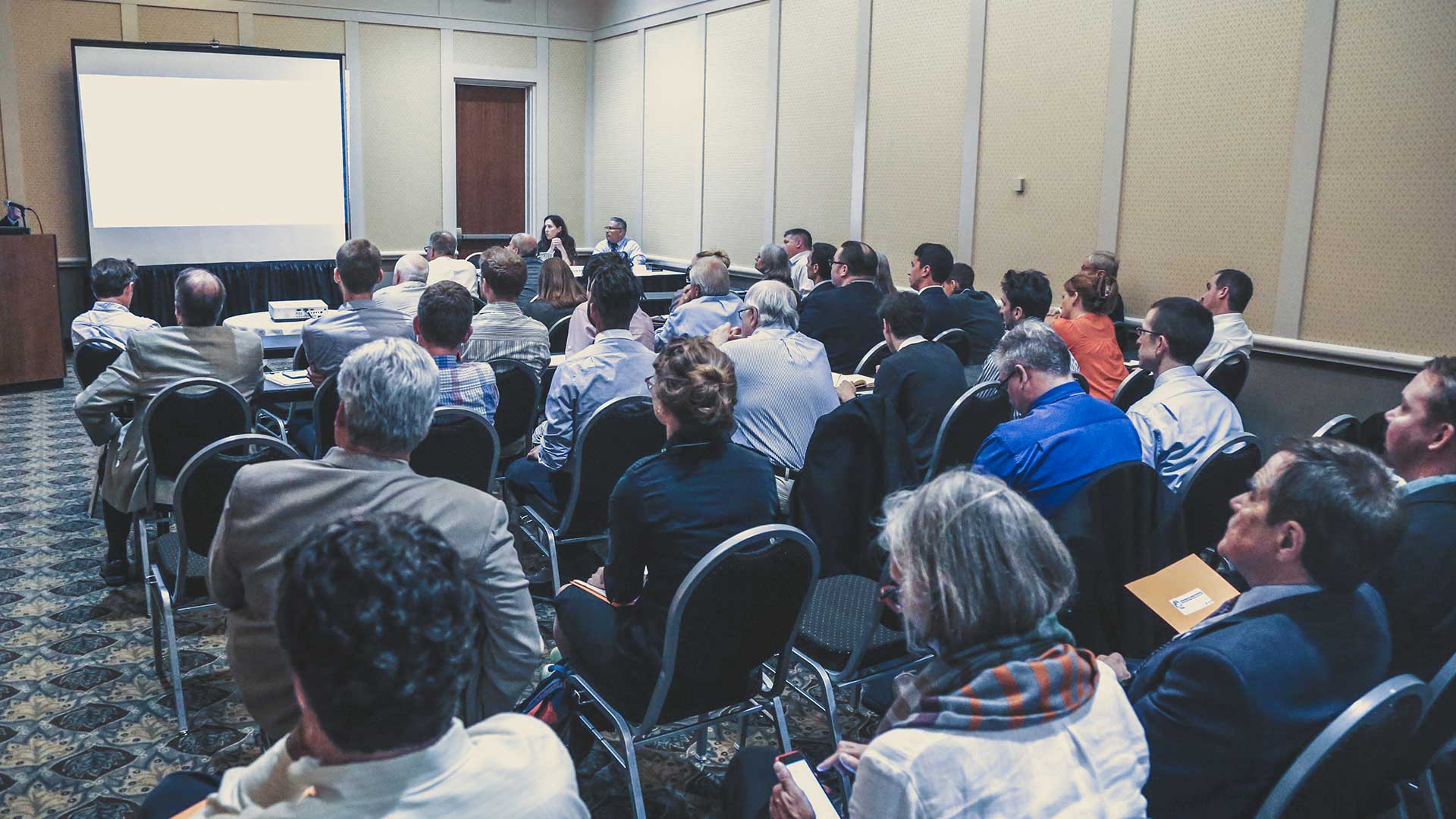
The Power of Place Summit was designed to provide inspiration and education so you can put smart growth principles into action. Every two years, we convene 500+ attendees across a wide range of industries to gain insights, engage in dialogue, and make connections.
Through innovative place-based strategies and a range of new funding opportunities, we can tackle our acute housing crisis, climate change, social, racial and environmental justice, post-Covid recovery and community revitalization without displacement. Our daylong, statewide conference focuses on the assets and strengths that contribute to our state’s exceptional quality of place.
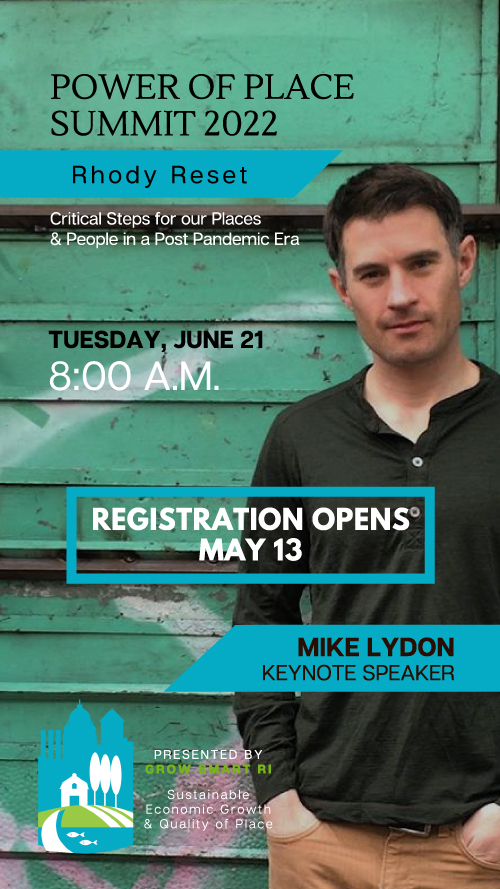
We’re especially excited to feature an inspiring keynoter, internationally recognized smart growth strategist and tactical urbanism expert Mike Lydon. Mike will share his extensive research on the new opportunities and imperatives for smarter growth catalyzed by the pandemic during his talk, “Strong, Healthy and Vibrant Communities in a Post Pandemic World.”
Join us in promoting and celebrating successful smart growth, development, policy, and planning.
Are you unable to sponsor the Power of Place 2022 Summit but still want to promote your business? Fill out our Google Form to purchase exhibit space!

Made Possible By:




Piccerelli, Gilstein & Company, LLP | Morgan Stanley | Mulligan’s Island | SK Wealth | Washington Trust
Here’s what’s coming at our 2022 Power of Place Summit:
As we emerge from one of the most disruptive global crises of our lives, it’s time to renew our networks and partnerships and commit to confronting the pressing challenges of this moment.
Through innovative place-based strategies and a range of new funding opportunities, we can tackle our acute housing crisis, climate change, social, racial and environmental justice, post-COVID recovery and community revitalization without displacement.
That’s why we’re excited to announce the reconvening of the Power of Place Summit!
Even though registration is open, we still have exhibit space open and will continue to accept sponsors! Fill out our google form to join the 2022 Power of Place Summit.
Those who are seeking a scholarship can email John Flaherty to learn more.

We’re especially excited to feature an inspiring keynoter, internationally recognized smart growth strategist and tactical urbanism expert Mike Lydon. Mike will share his extensive research on the new opportunities and imperatives for smarter growth catalyzed by the pandemic. NPR, The New York Times, The Guardian, and ABC News have featured his work, among many other publications. Having delivered more than 250 keynotes, workshops, trainings, and lectures since 2009, Mike has exerted a global influence on how people think about city transformation. In 2018, Mike was named by Planetizen as one of the top 100 most influential urbanists of all-time.
His talk, “Strong, Healthy and Vibrant Communities in a Post Pandemic World” will dig into the data, trends and insights from across the nation and the world. Following that, a dynamic panel of local leaders will respond and apply Mike’s insights to the Rhode Island and regional context.
We hope you’ll mark your calendar and join forces with a community of up to 500 change agents, development practitioners, policy experts, civic and elected leaders to engage one another in leading neighborhood revitalization, environmental stewardship, and economic opportunity for all.
Pre-planning your day at The Power of Place Summit? Download the full schedule
8:00 a.m. – 8:30 a.m. | Registration & Networking in the Exhibit Area
8:30 a.m. – 10:30 a.m. | Morning Plenary
- Welcome Presentation by Michael Friedman, Board Treasurer of Grow Smart RI
- Remarks by Governor McKee
- Summit Overview by Scott Wolf, Executive Director of Grow Smart RI
Keynote Speaker Presentation “Strong, Healthy and Vibrant Communities in a Post Pandemic World” by Mike Lydon
Our keynote speaker this year is Mike Lydon. Mike is an internationally recognized planner, writer, speaker, and advocate for livable cities. NPR, The New York Times, The Guardian, and ABC News have featured his work, among many other publications. Having delivered more than 250 keynotes, workshops, trainings, and lectures since 2009, Mike has exerted a global influence on how people think about city transformation. In 2018, Mike was named by Planetizen as one of the top 100 most influential urbanists of all-time.
Mike will share his extensive research on the new opportunities and imperatives for smarter growth catalyzed by the pandemic in his talk, “Strong, Healthy and Vibrant Communities in a Post Pandemic World.” It will dig deep into the data, trends and insights from across the nation and the world. Following that, a dynamic panel of local leaders will respond and apply Mike’s insights to the Rhode Island and regional context.
10:30 a.m. – 11:00 a.m. | Networking in Exhibit Area
11:00 a.m. – 12:15 p.m. | Morning Workshops
Hover for Housing — Leveraging TOD to Meet Housing Demand and Make Great Places
Transit-oriented development, or TOD, is a type of development that includes a mix of commercial, residential, office and entertainment centered around or located near high-quality transit. TOD primarily occurs when state and local governments collaborate and encourage it through land use planning, changes to zoning laws and improved transit, among other things. It's also one of the most promising ways for Rhode Island to increase sorely needed housing supply in a way that revitalizes urban and town centers and commercial corridors without the traffic, congestion and emissions associated with conventional development. With major transit projects currently in the works, come hear the latest on TOD initiatives along North Main Street in Providence and the Conant Thread District in Pawtucket/Central Falls where a new train station is scheduled to open later this year . Gain insight into the challenges and opportunities of meeting the growing demand for housing in walkable, transit-rich neighborhoods and how to do so without displacing existing residents.
Moderator Dave Caldwell — Vice President, Caldwell & Johnson Custom Builders
Sarah Ingle — Long Range Planning Manager, RIPTA
Jess Lance, AICP — Principal Planner, City of Providence Department of Planning and Development
Jan Brodie — Executive Director, Pawtucket Foundation
Hover for Transportation - The Road to Zero Carbon: How RI can build a Clean Transportation System
In 2021, Rhode Island passed the historic Act On Climate, which established a legally-enforceable mandate to reduce greenhouse gas emissions. Because transportation is the largest source of emissions in Rhode Island and the most recent data indicates emissions are growing, there is an urgent need to shift the way we move people and goods to cleaner, low-carbon options. Join this session to learn about what RI’s climate goals mean for the way we build and plan transportation infrastructure for electric cars, transit, and active mobility.
Moderator Mal Skowron — Transportation Program & Policy Coordinator, Green Energy Consumers Alliance
Terry Gray — Acting Director, RI Department of Environmental Management
Patrick Crowley — AFL-CIO and Co-Chair of Climate Jobs RI
Hover for Bike-Ped Mobility — From Paper to Pathways: Bringing the RI Bike Mobility Plan to Life
Following two years of analysis and public engagement, Rhode Island adopted its first ever statewide Bicycle Mobility Plan in December 2020. This happened just as a global pandemic was raging and people’s appreciation for walking and biking increased dramatically. The plan seeks to safely and efficiently connect people and places so that riding a bike in Rhode Island is safe and fun for all ages, whether for recreation or transportation. However, despite record levels of federal infrastructure funding availability, the State of Rhode Island has not yet budgeted state match funds necessary to fully implement the plan over the next 10 years. Hear from a panel of national, regional and local advocates and planners about what’s working to advance bike mobility in other states, lessons learned and recommendations for accelerating implementation of Rhode Island’s Bicycle Mobility Plan.
Moderator Liza Burkin — Lead Organizer, Providence Streets Coalition
Ryan Chao — CEO, Rails to Trails Conservancy
R. Bruce Donald — Southern New England Manager, East Coast Greenway Alliance
Kathleen Gannon — Chair, RI Bike Coalition
Hover for Solar Siting Reform & Forest Conservation — RI Can Meet our Renewable Energy Goals and Conserve Forests
Learn about the ongoing solar siting issue, and how we can take a step toward a legislative solution that enables the protection of forests, establishes preferred siting locations, supports renewable energy sources and clean energy jobs! Speakers will discuss how a solar siting reform bill (H 7531) charts a path forward that would allow us to: Align state goals for renewable energy and forest conservation, level the playing field across clean energy programs, and encourage development in preferred locations.
Priscilla De La Cruz — Senior Director of Government Affairs, Audubon Society of RI
Meg Curran Senior Attorney — Senior Attorney, Conservation Law Foundation
Kai Salem — Policy Coordinator, Green Energy Consumers Alliance
Scott Millar — Director of Conservation and Community Assistance, Grow Smart RI
Topher Hamblett — Director of Advocacy, Save The Bay
Sue Anderbois — Climate and Energy Program Manager, The Nature Conservancy
Hover for Main Street & Placemaking — People Power: Community-Led Placemaking
Places thrive when people who love them are empowered to meaningfully contribute to making them great. Hear from three diverse Rhode Island communities who are addressing different issues in different ways, but who are all organizing exciting projects and advancing potentially transformative changes. They’ll share their challenges, successes, lessons learned, and future aspirations, followed by a discussion about how every community can best leverage their greatest asset: its people!
Moderator Adam Brunetti — Chairperson, Downtown Woonsocket Collaborative
Garrett Mancieri — Board Member/Former Executive Director, Downtown Woonsocket Collaborative
Dwayne Keys — Chairperson, South Providence Neighborhood Association
Susan Marcus — Economic Development Committee Member, Town of South Kingstown
Randall L. Collins, Jr., RLA, ASLA — Vice President, BETA Group, Inc.
William A. Green, ASLA — Department of Landscape Architecture< University of Rhode Island
Hover for Economic Development & DEI — Expanding our Toolkit for Sustainable Economic Development
As the smallest state, Rhode Island has the opportunity to lead the way on collaborative, common-sense approaches to economic development. This session will highlight the new, innovative program RI Ready, implemented by the Quonset Development Corporation to streamline development of industrial sites around the state in order to attract investment and create jobs. Presenters will then discuss how the state’s land use laws might be reformed to similarly incentivize housing development and other uses that will enhance and grow RI’s economy, exploring possible programs from other places that are worth considering here and how all of this work is being considered by the RI House of Representatives’ Land Use Commission.
Moderator Scott Wolf — Executive Director, Grow Smart RI
Chelsea Siefert — Director of Planning and Development, Quonset Development Corporation
Dylan Conley — Land Use Attorney/Member of the Land Use Commission
Hover for Climate Change & Resiliency — Sea Level Rise: This Is an Actual Emergency
Because the impacts of sea level rise are not immediately noticeable, it is harder for people to understand than other threats and disasters. However, sea level rise is being accelerated by climate change faster than projected and will have profound effects on municipalities. We must take action now and lead the difficult conversations to choose between doing nothing or planning ahead. This session will look at models of projected impacts and discuss opportunities and ideas to build resiliency, including a local perspective from the Town of Warren, RI and from another state familiar with climate challenges, Louisiana. Presenters will explore what this all means for the entire state of Rhode Island and what resources exist to help us all prepare.
Moderator Tuni Schartner — Small Business Growth Consultant, Tuni Schartner Consulting, LLC
Shaun O’Rourke — Managing Director, Program and Business Development, RI Infrastructure Bank
Bob Rulli — Director, Office of Planning & Community Development, Town of Warren
Camille Manning Broome — President & CEO, Center for Planning Excellence, Baton Rouge, LA
12:30 p.m. – 2:00 p.m. | Luncheon and Smart Growth Awards Program
2:15 p.m. – 3:45 p.m. | Afternoon Workshops
Hover for Housing — Mapping Rhode Island’s Municipal Zones: The Search for Where & How to Produce More Housing
This session describes HousingWorks RI’s foray into Rhode Island municipal residential zoning to better understand the potential for the creation of more homes across the state’s municipalities. Through GIS analysis and municipal comprehensive plans, HWRI is seeking to discover where and how municipalities may be able to achieve more diversity of housing types to meet the needs of a wide range of households. The panel will be moderated by Annette Bourne, HWRI’s Director of Research & Policy, with presentations by HWRI’s Research Analyst Bryce Kelley and GIS Consultant Chris Chutz, who will explain the methodology and outcomes thus far. Josh Saal, Rhode Island’s new Deputy Secretary of Commerce for Housing will provide reaction and commentary to the presentation.
Moderator Annette Bourne — Research & Policy Director, HousingWorks RI at RWU
Bryce Kelley — Research Analyst, HousingWorks RI at Roger Williams University
Christopher Chutz — TGIS Consultant, HousingWorks RI at Roger Williams University, and Project Manager, Church Community Housing Corporation
Josh Saal — Deputy Secretary of Commerce for Housing, State of Rhode Island
Hover for Transportation — Opportunities and Challenges in implementing the state's Transit Master Plan
Good transit as envisioned in the state's Transit Master Plan (TMP) can be a tool for steering development to appropriate locations, reviving our core cities and town centers, for addressing climate change, pollution, and congestion issues, and for helping keep RI energy dollars within the state. But there are financial, political, and cultural challenges to overcome in order to achieve the goals articulated in the TMP. This panel will provide a brief overview of the TMP followed by a discussion of its implications for Rhode Island and its prospects for implementation as seen by RIPTA, a transit rider, an environmental activist, and the audience.
Moderator Barry Schiller — RI Transit Riders, former RIPTA Board member
Sarah Ingle — Long Range Planning Manager, RI Public Transit Authority
Edilberta Trejo — Transit Rider and Community Activist
James Celenza — Transit Rider, Climate Activist, and Director of RI Committee on Occupational Health and Safety
Hover for Bike-Ped Mobility — Building Green & Complete Streets for People of all Ages and Abilities
Green and complete streets are those that are designed, retrofitted and operated to enable safe passage by people of all ages and abilities including those who walk, roll, drive, or use public transportation. The concept of green and complete streets also includes designs for improving environmental quality by incorporating green infrastructure like street trees, as well as on-site pretreatment of stormwater prior to eventual release into local waterways. Join this panel discussion to learn more about efforts to build complete streets across Rhode Island, a state law requiring its consideration, local municipalities adopting green & complete streets ordinances, community engagement to promote awareness and understanding, pilot trial projects and how Rhode Island can learn from other states and municipalities to improve the walkability, bikeability and environmental sustainability of our communities.
Moderator Liza Burkin — Lead Organizer, Providence Streets Coalition
Tina Guenette Pedersen — CEO, Real Access Motivates Progress (R.A.M.P)
Matt Netto — Associate State Director, AARP-Rhode Island
Marjorie Waters — Community Organizer, RI Organizing Project
Hover for Solar Siting Reform & Forest Conservation — A Game Changer: The RI Forest Conservation Act
RI's forests provide the clean/safe water we drink and the air we breathe in addition to many other important values. For too many years this vitally important resource has been off the radar screens of key decision makers, until now. Last year the RI Forest Conservation Act was adopted that recognized many values of forests and established a Forest Conservation Commission with a broad charge to conserve RI forests for future generations. This session will describe the forest conservation act. Members of the forest conservation commission will explain why this act is so important to maintain the forest values they have been striving to conserve.
Moderator Scott Millar — Director Conservation and Community Assistance Grow Smart RI
Terry Gray — Acting Director, RI Department of Environmental Management
Kate Sayles — Executive Director, RI Land Trust Council
Marc Tremblay — Professional Forester
Cassie Tharinger — Executive Director Providence Neighborhood Planting Program
Hover for Main Street & Placemaking — Building Green & Complete Streets for People of all Ages and Abilities
Green and complete streets are those that are designed, retrofitted and operated to enable safe passage by people of all ages and abilities including those who walk, roll, drive, or use public transportation. The concept of green and complete streets also includes designs for improving environmental quality by incorporating green infrastructure like street trees, as well as on-site pretreatment of stormwater prior to eventual release into local waterways. Join this panel discussion to learn more about efforts to build complete streets across Rhode Island, a state law requiring its consideration, local municipalities adopting green & complete streets ordinances, community engagement to promote awareness and understanding, pilot trial projects and how Rhode Island can learn from other states and municipalities to improve the walkability, bikeability and environmental sustainability of our communities.
Moderator Liza Burkin — Lead Organizer, Providence Streets Coalition
Tina Guenette Pedersen — CEO, Real Access Motivates Progress (R.A.M.P)
Matt Netto — Associate State Director, AARP-Rhode Island
Marjorie Waters — Community Organizer, RI Organizing Project
Hover for Economic Development & DEI — The Case for Reparations: Equitable Renewal
The murder of George Floyd and our ongoing reckoning with the legacies of slavery, redlining and Urban Renewal have prompted calls by many for reparations. The release of “A Matter of Truth” laid bare our complicity in this horrific saga and led to the development of a Reparations Framework focusing on those impacted by Urban Renewal. This session will discuss the evolution of that framework and the current work of the Reparations Commission. We will also examine the efforts of RWU Architecture students who used design as a means for engaging with these sites of past trauma in order to envision a more sustainable, just and equitable future for the City of Providence.
Ray Watson — Founder/CEO Providence Cultural Equity Initiative, AAAG, member of Providence Municipal Reparations Commission
Brian Hendrickson — Assist. Prof. of Writing Writing Studies, RWU
Richard Godfrey — Exec. Dir. of Real Estate Programming, RWU, Former Exec. Dir. of Rhode Island Housing
Edgar Adams — Prof. of Architecture and Urban Studies, RWU
Hover for Climate Change & Resiliency — Building Climate Ready Providence: Role of Smart Growth
This discussion will explore plans to implement a comprehensive climate vulnerability assessment of the state's capital city, and create a roadmap to prepare the city for climate impacts. Last year, the Providence Resilience Partnership released a report that showed Providence’s risk from storm surge, sea level rise, and extreme rain events is urgent and will increase soon to unmanageable levels. Smart growth principles underlie much of climate resilience thinking and this session will examine their role in the development of Climate Ready Providence, as well as for communities across the state.
Moderator Michele Jalbert — Executive Director, Providence Resilience Partnership
Curt Spalding — Spalding Environment/Climate Strategies
Pam Rubinoff — URI Coastal Resources Center Associate Coastal Manager, Coastal Resilience
3:30 p.m. – 4:30 p.m. | Cocktail Reception in Exhibit Area
We will be announcing this year’s award winners shortly! The categories for each nominee are Smart Growth Leadership (Individual or Organization), Outstanding Smart Growth Project (Urban, Suburban, Rural), and Public Policy and Planning Award.
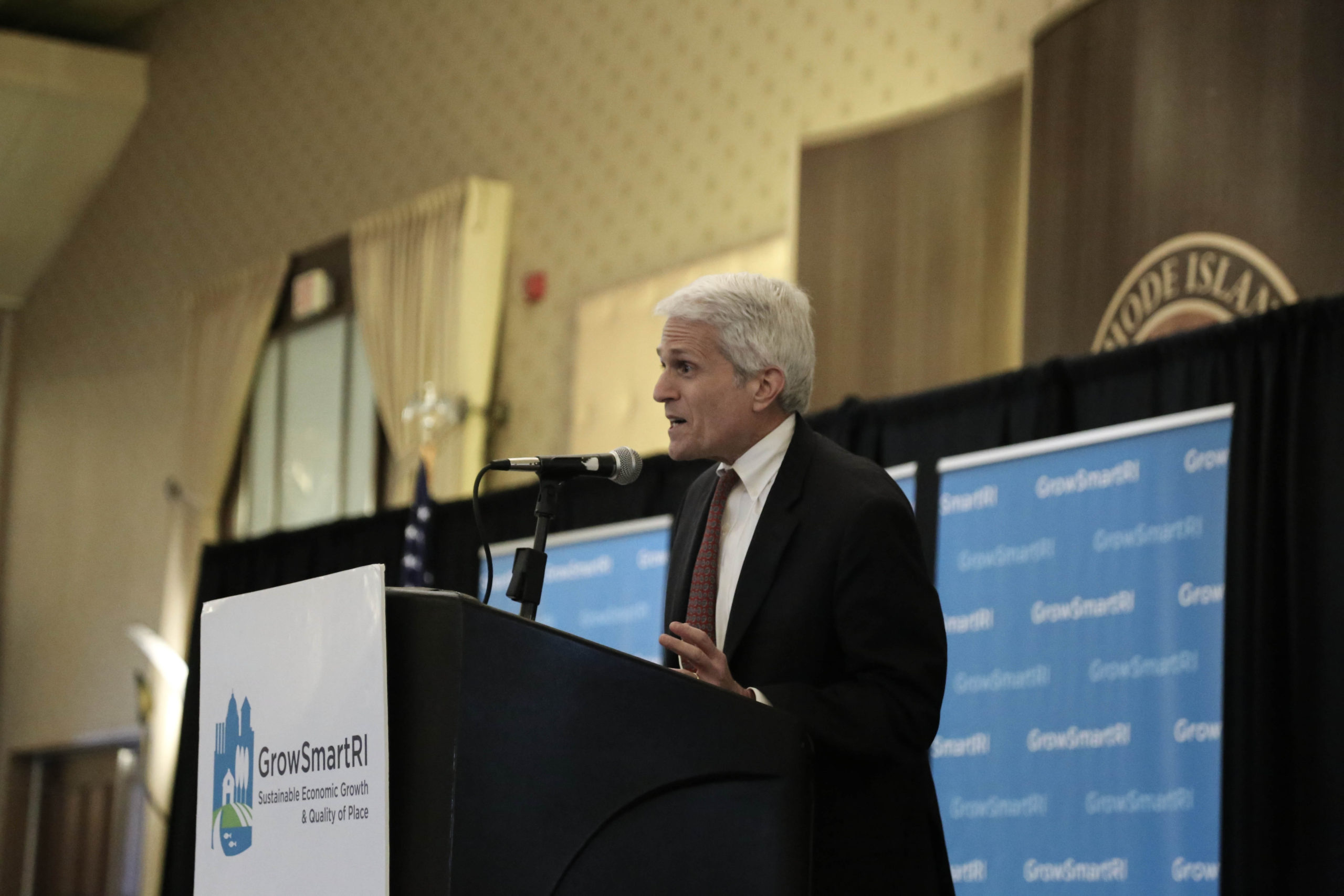
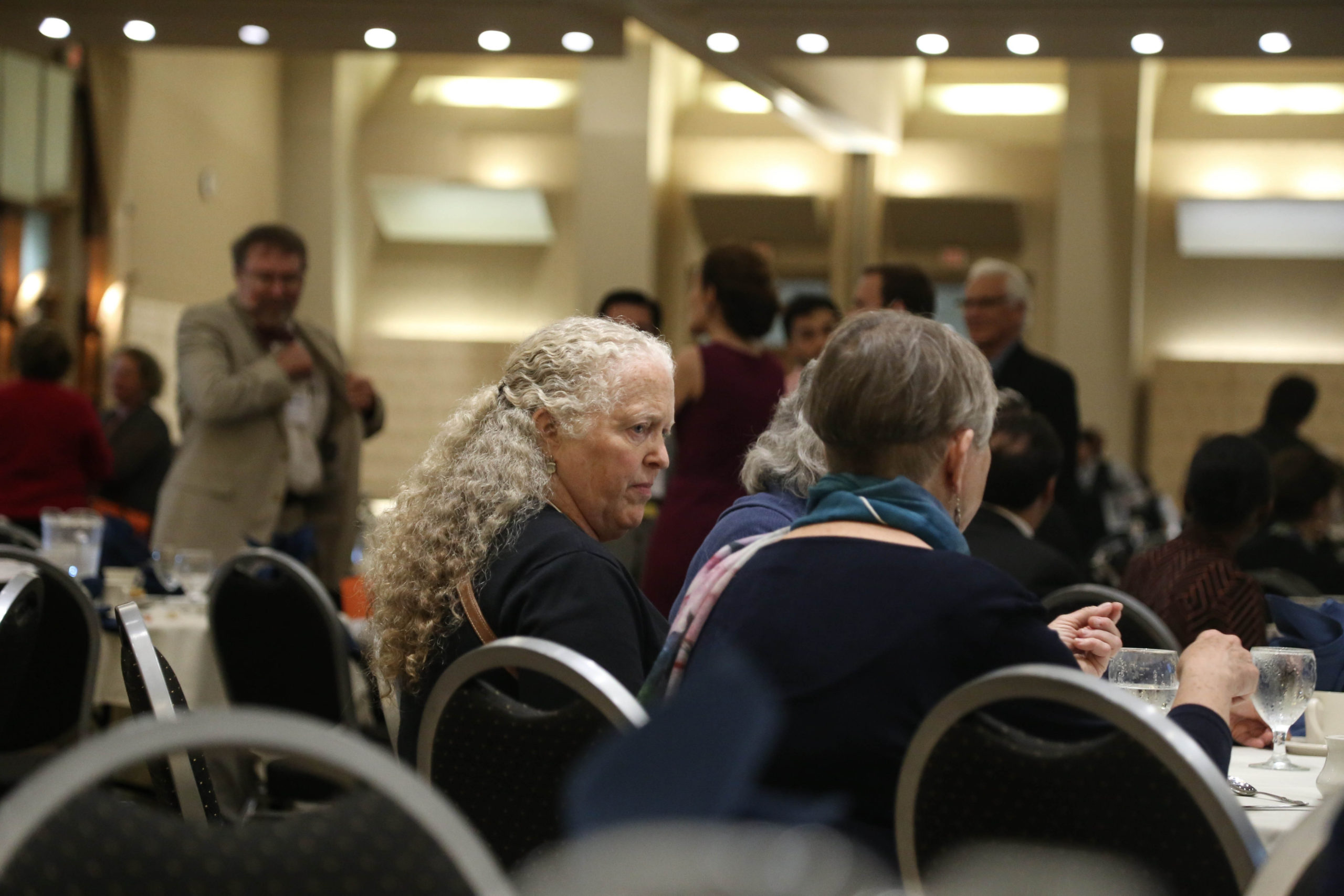
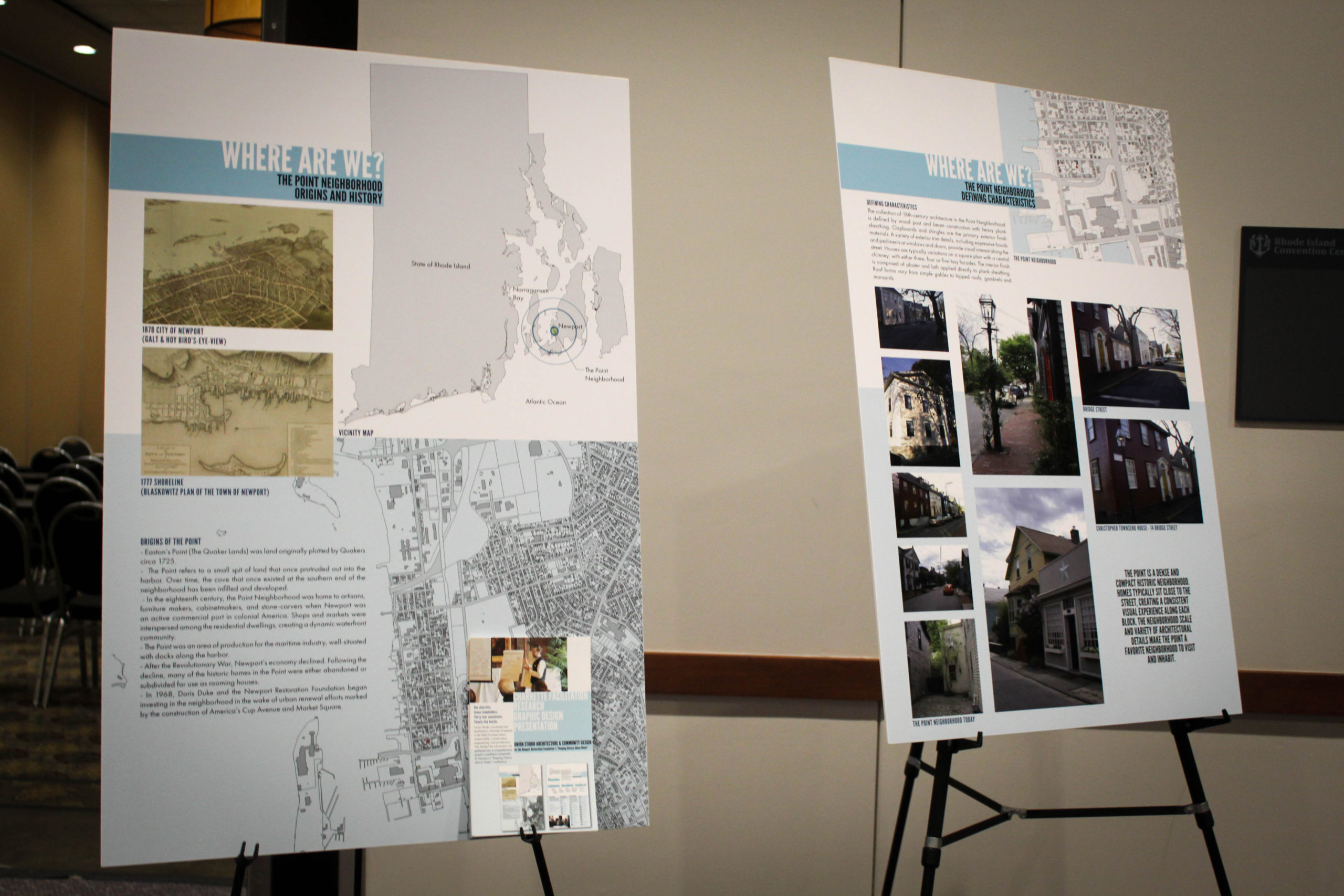
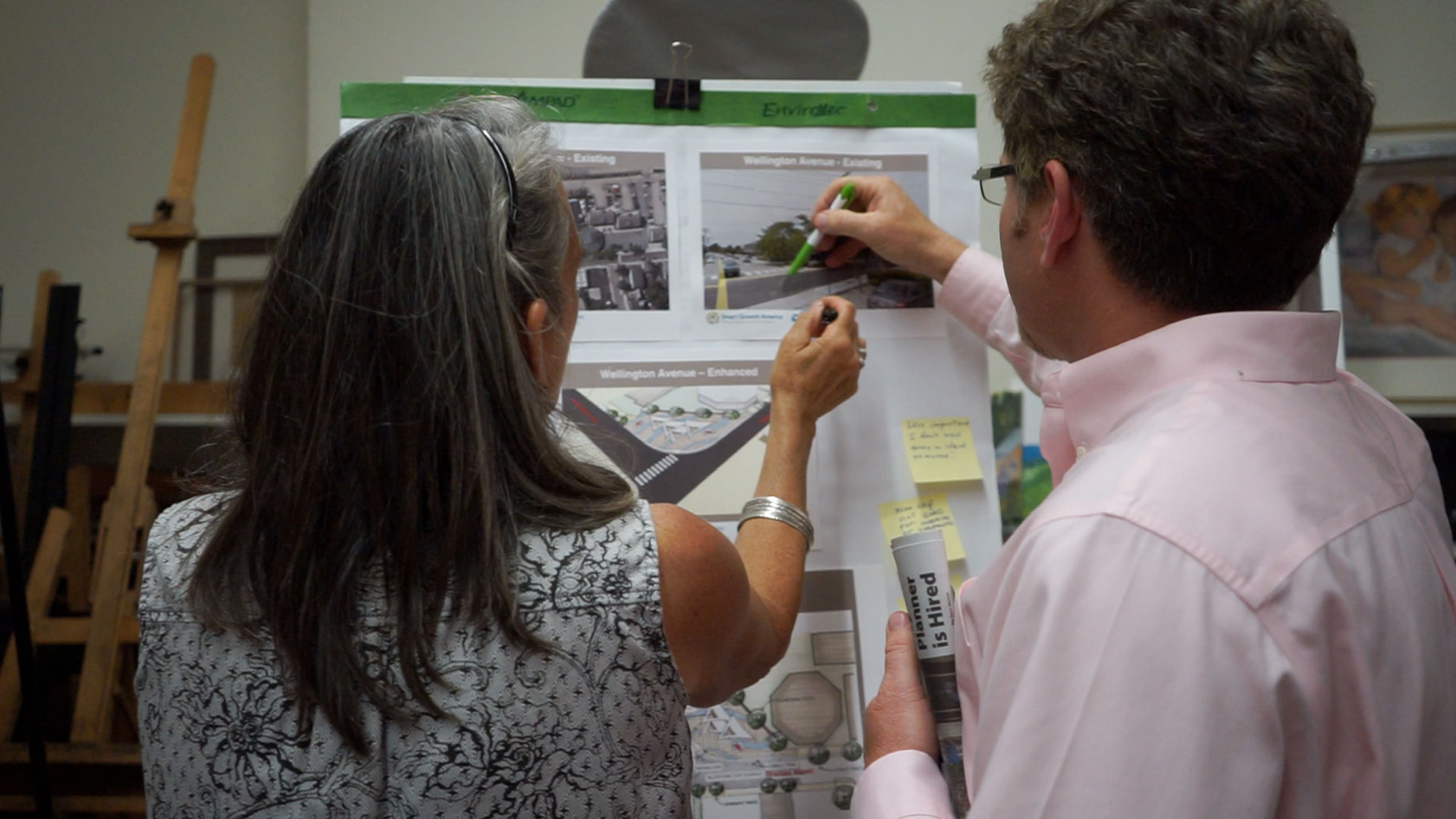
Looking for more Power of Place content? Look back at our previous events
Grow Smart RI’s Mission Statement
To lead and engage Rhode Islanders in advancing neighborhood revitalization, environmental stewardship, and economic opportunity for all.
Our Office
144 Westminster Street, Suite 303
Providence, RI 02903
Contact Us
Stay informed with periodical email updates.